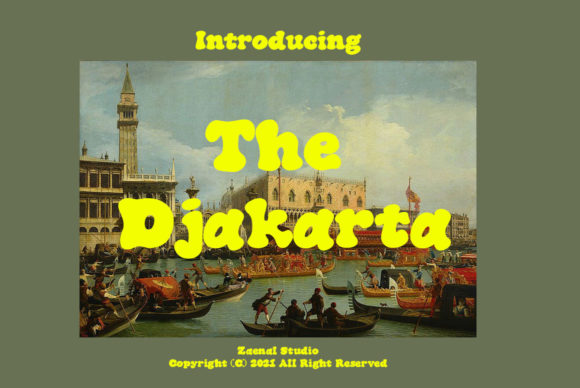
The Djakarta Font for Modern Web Design
The Djakarta is a display font that brings retro charm and modern clarity to digital design. With its cool, stylized letterforms, it’s ideal for creating brand-focused web experiences where typography plays a central role. As a designer, I’ve found that fonts like The Djakarta help establish visual hierarchy and reinforce brand tone in ways that are both subtle and impactful.
Its PUA encoding makes it easy to access all the glyphs and swashes, which is especially useful when designing logos or brand assets that require unique characters. This level of detail ensures that your designs remain consistent across different platforms and sizes.
Visual Characteristics and Digital Appeal
The Djakarta has a distinct personality with its rounded edges and slightly slanted strokes. It feels nostalgic yet contemporary, making it suitable for creative industries ranging from fashion to tech. Its clean lines and balanced proportions ensure readability even at smaller sizes, which is essential for responsive layouts.
This font works well in hero sections, call-to-action buttons, and header text. When used sparingly, it adds a touch of elegance without overwhelming the user experience. For instance, using The Djakarta as the main title on a portfolio site can instantly set the tone for a creative and professional brand identity.
Applying The Djakarta in Real-World Scenarios
In practice, The Djakarta shines in several key areas:
- Hero Sections: Use it for large headings to draw attention and create a strong first impression.
- Landing Pages: Pair it with a sans serif font for body copy to maintain contrast and readability.
- Online Stores: Feature it in banners or product titles to align with a brand’s aesthetic while maintaining professionalism.
- Blog Headers: Add a touch of character to section headers or post titles without compromising legibility.
- Course Pages: Highlight course names or module titles with this font to make them stand out visually.
When designing for mobile screens, it's important to test The Djakarta at various sizes. While it performs well in most scenarios, ensuring sufficient spacing between letters and lines will enhance readability on smaller devices.
Font Pairing and Brand Consistency
One of the best practices when working with display fonts like The Djakarta is to pair them with complementary typefaces. A simple sans serif font such as Helvetica or Arial can provide a clear contrast for body text, allowing The Djakarta to shine in headlines and subheadings.
For editorial or more formal projects, pairing The Djakarta with a serif font like Georgia or Times New Roman can create a sophisticated look. This combination is particularly effective for digital magazines, blogs, or content-heavy websites.
Consistency in font usage across different sections of a website helps build a strong brand identity. Whether you're designing a landing page for a SaaS product or a boutique online store, maintaining a cohesive typographic style reinforces trust and professionalism.
Readability and User Engagement
While The Djakarta is a display font, it still needs to be readable. Avoid using it for long paragraphs or small text elements. Instead, reserve it for short phrases, logos, and decorative accents where its visual appeal can be fully appreciated.
Consider how users scan web pages—most tend to read in an F-pattern, so placing important information in areas where The Djakarta is used can guide their attention effectively. Using it for key calls to action or headline content can increase engagement and conversion rates.
Testing The Djakarta on dark and light backgrounds is also crucial. It tends to work well on light backgrounds but may require adjustments in color or contrast when used on darker tones.
Practical Considerations for Web Designers
Before implementing The Djakarta on a live site, check if it supports the necessary styles, weights, and languages. Confirm that it’s available as a webfont and that it includes all the glyphs and alternates needed for your project.
For commercial use, ensure that you have the appropriate licensing for your project. Whether you're building a client website, an online store, or a digital template, proper licensing protects both you and your clients from legal issues.
Finally, always consider how The Djakarta contributes to the overall design system. If it aligns with your brand’s voice and visual language, it can become a powerful tool in shaping a memorable user experience.